Expertise
Bird Care Guide
The same husbandry standards we follow in the aviary, written for your home.
Housing & Cage Setup
Buy the largest cage your space allows, with horizontal bars for climbing species. Provide at least four perches of varying diameter and natural material — never all-dowel. Position the cage against a wall at chest height so your bird feels secure, out of direct kitchen airflow.
Diet & Nutrition
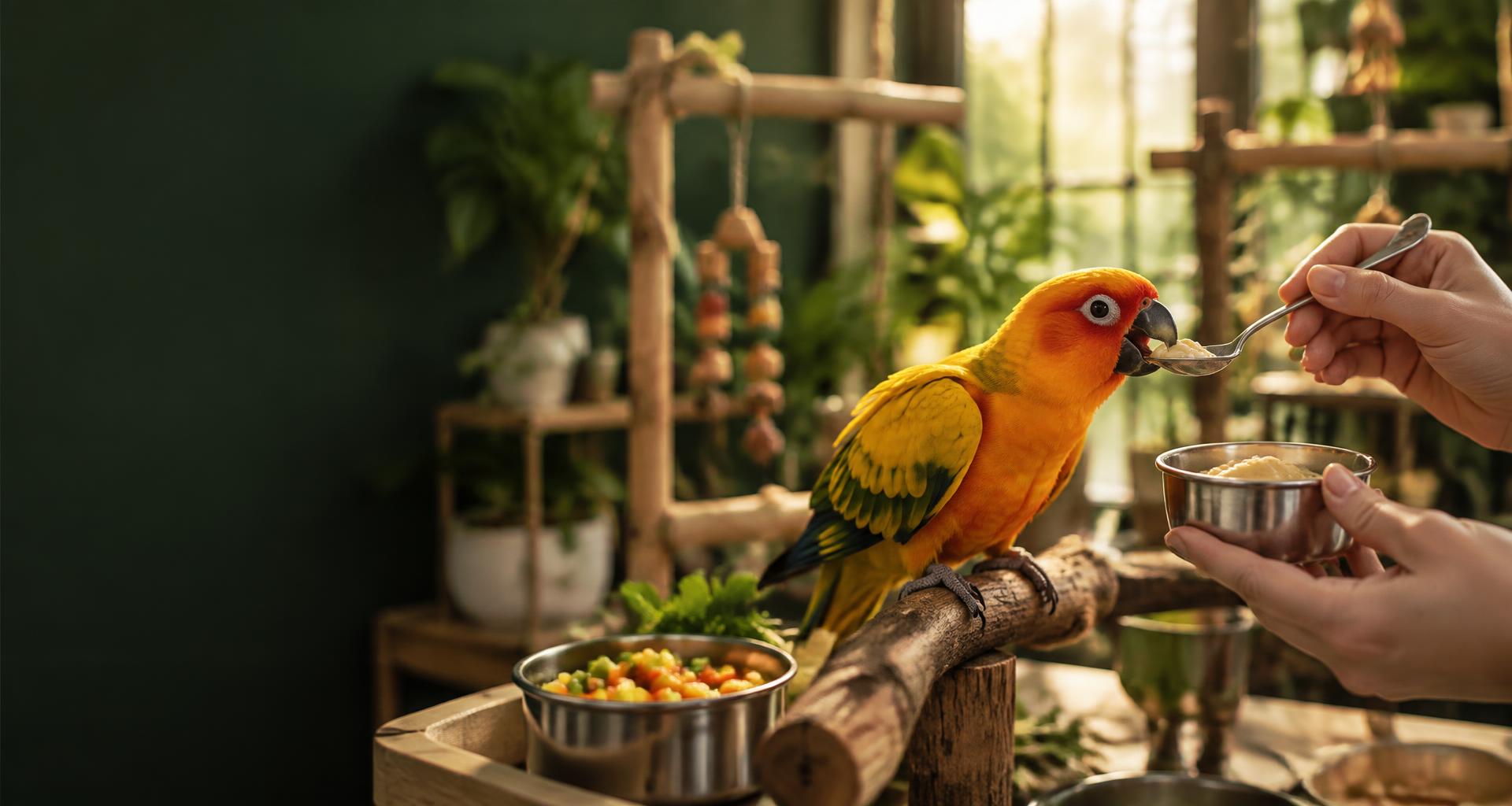
A quality formulated pellet should make up 60–75% of the diet, with fresh chopped vegetables daily and fruit as a limited treat. Never feed avocado, chocolate, caffeine, alcohol, onion or anything cooked in non-stick cookware — PTFE fumes are fatal to birds.
Enrichment & Training
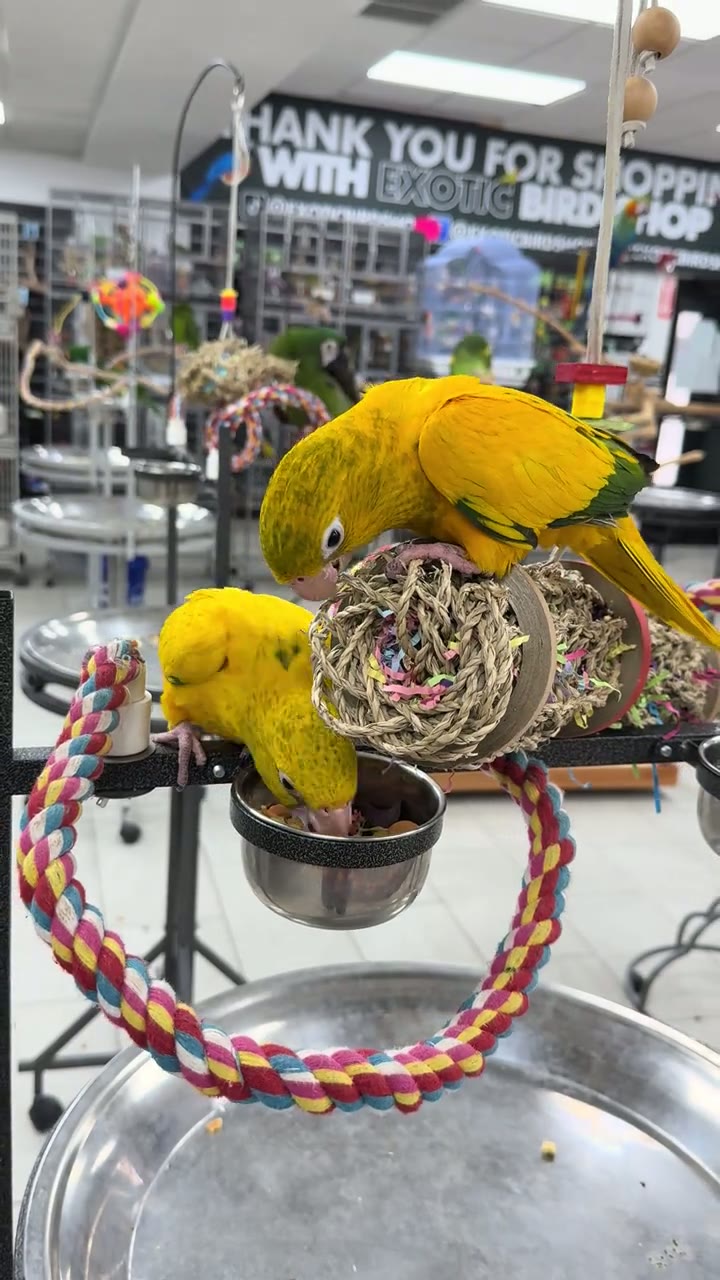
Parrots need 3–4 hours of out-of-cage stimulation a day. Rotate foraging toys weekly, teach one new behavior a month with positive reinforcement, and never punish — birds do not learn from correction, only from reinforcement.
Health & Veterinary Care
Establish a relationship with a certified avian veterinarian before your bird arrives. Schedule a wellness exam within 30 days of delivery, then annually. Weigh your bird weekly on a gram scale; a 10% drop is an emergency.
Lighting, Sleep & Bathing
Birds require 10–12 hours of uninterrupted darkness. Provide full-spectrum lighting for 4–6 hours daily in low-sunlight homes, and offer a shallow bath or mist two to three times a week for feather condition.
Safety at Home
Ceiling fans, open toilets, uncovered windows, scented candles, aerosols and non-stick cookware are the leading household hazards. Bird-proof one dedicated room before the first flight session.